
Patio Installers in Kent: Porcelain, Sandstone & Natural Stone
Porcelain and natural stone patios, laid level, fully bedded and built to drain.
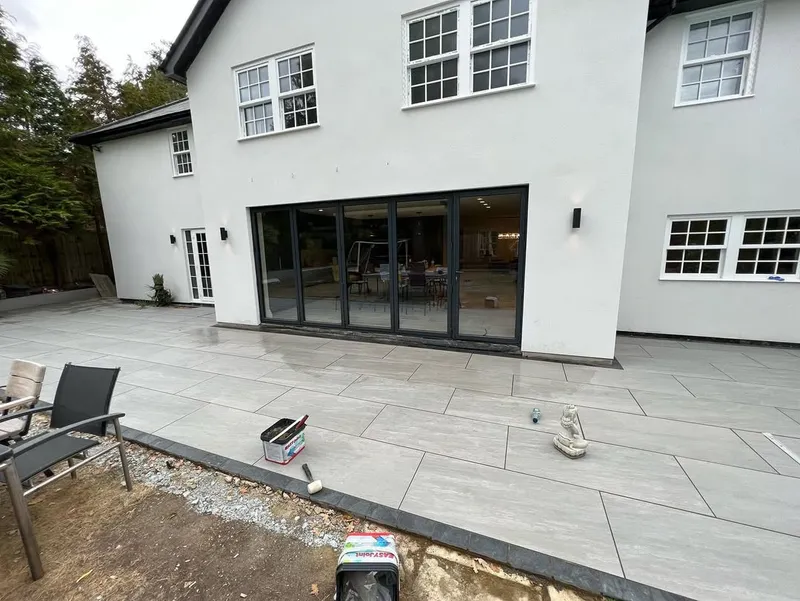
A good patio should feel like part of the house. We plan the size and level around how you'll use it, whether that's a table for six, a spot that catches the evening sun or a flush step out from bi-fold doors, and then build it so it stays flat and drains properly for years.
We lay porcelain, Indian sandstone and other natural stone. Every slab is laid on a full mortar bed rather than a few dabs, which stops rocking and hollow spots, and the whole area is set to a gentle fall so rain runs off instead of pooling.
Patios often come with other work: raised sections, brick edging, steps, planters or a path down the garden. We can design and build all of it together so the finish is consistent.


Options
Choosing what’s right for you.
Porcelain
Very consistent in colour and size, resistant to staining and easy to keep clean. It is harder to cut and needs a slurry primer to bond, so the labour is more specialist. Choose a textured finish for grip outdoors.
Indian sandstone
Natural variation in colour and a riven texture that suits traditional and cottage gardens. It is porous, so it can mark and weather over time, and benefits from an appropriate sealer if you want to keep it looking new.
Limestone and slate
Smooth, calm finishes that suit contemporary homes. Some darker stones can fade in strong sun, so it is worth seeing samples outside before choosing.
Raised patios
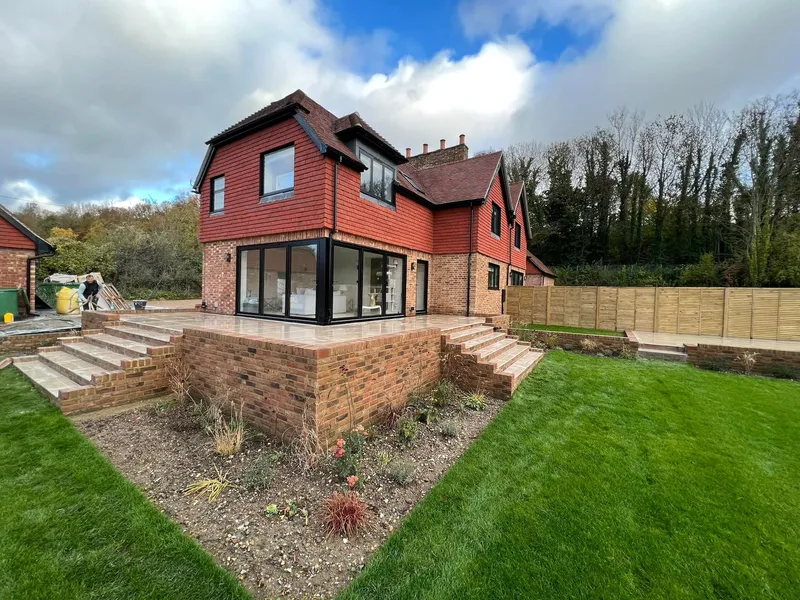
Where the garden slopes or you want a level step out from the house, a raised patio with brick or block retaining edges gives you usable space. It needs more structural work underneath and careful thought about steps and edges.
Our work
Patios we’ve built.

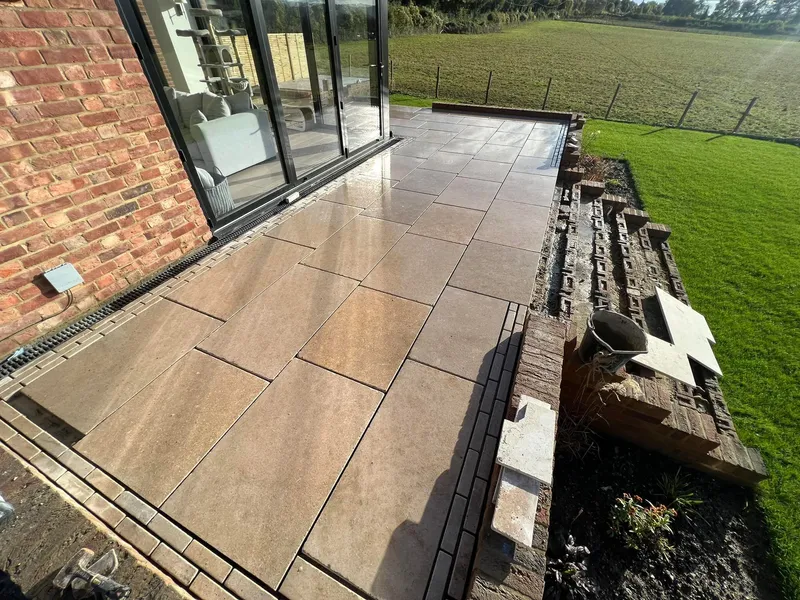
Large porcelain patio with lit steps and new fencing

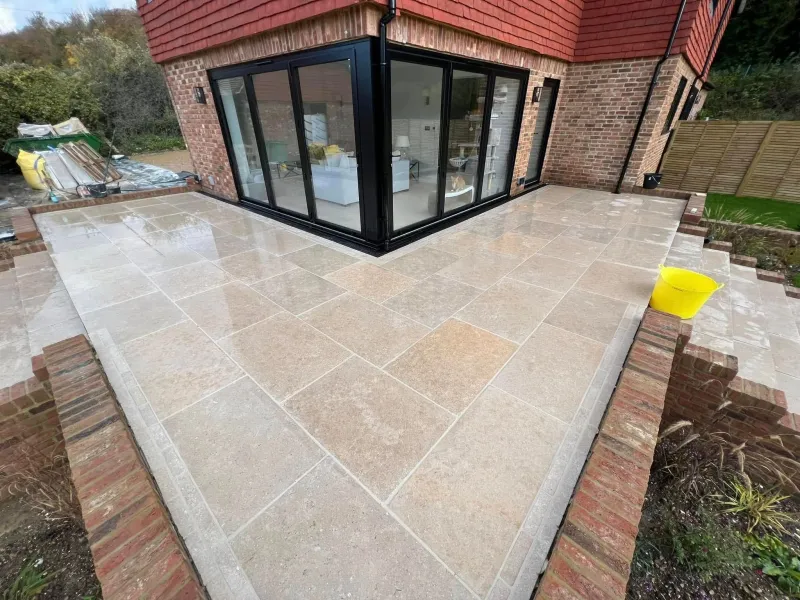
White porcelain patio for a new rear extension

Two-level sandstone patio with new brick steps
More photos
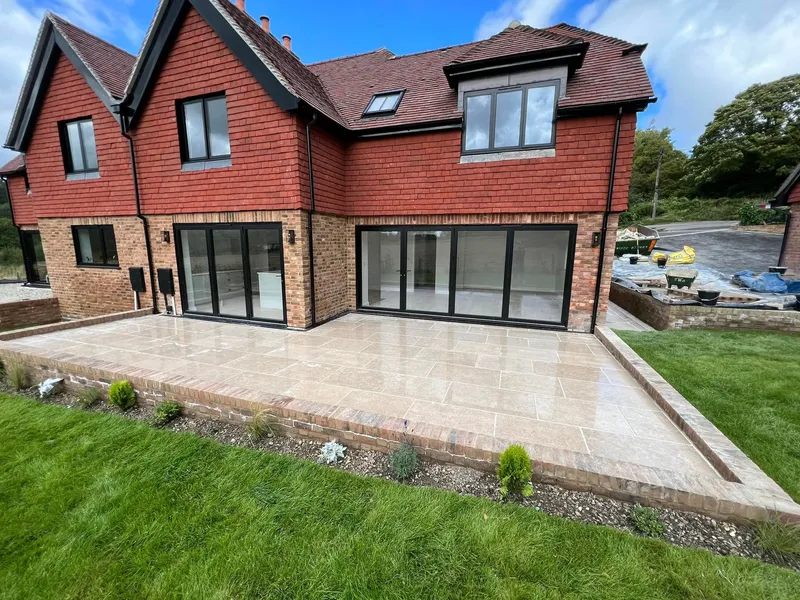
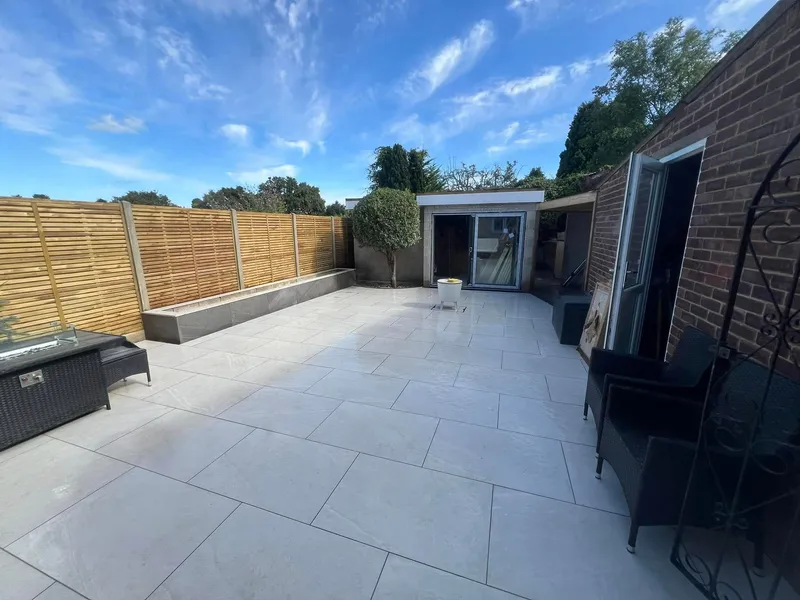

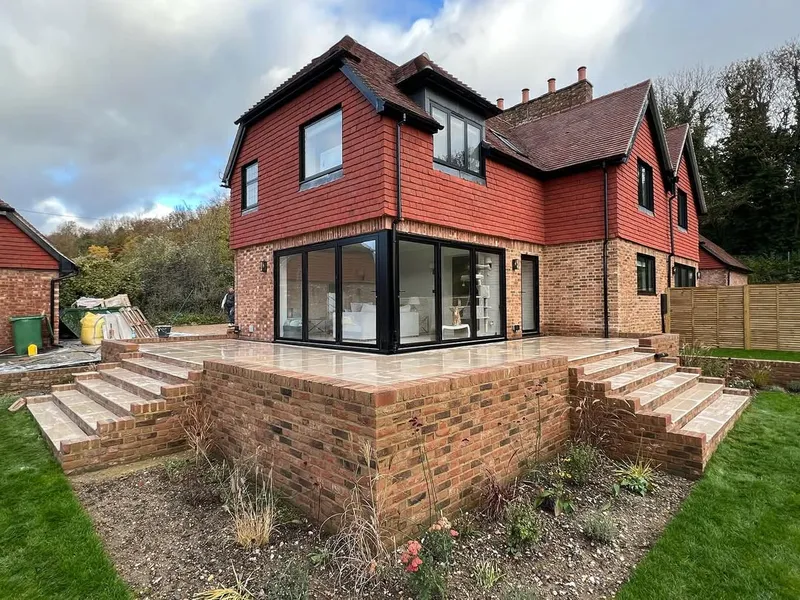
Worth knowing
Before you start.
- 01
Level against the house
The patio should sit below the damp-proof course of your house, typically by at least two brick courses, unless a drainage channel is fitted at the threshold. This protects your walls from damp.
- 02
Falls and drainage
A patio should never be dead flat. A gentle fall, away from the building, lets rain run off. On larger areas or heavy clay ground, a channel drain or soakaway may be needed.
- 03
Full bed, not spot bedding
Laying slabs on a few dabs of mortar leaves voids underneath that can crack slabs, collect water and cause rocking. We lay on a full bed, which costs a little more in materials and time but lasts far better.
How it works
Four clear steps, no surprises.
From the first visit to the final sweep, you’ll know what’s happening, when, and what it costs.
Site visit
We come out, measure up, check levels and drainage, and talk through what you want and how you use the space.
Clear quote
A written, itemised quote with materials, timings and what is and isn’t included. No pressure and no hidden extras.
The build
Proper excavation and sub-base first, then the finish. We keep the site tidy and keep you updated as we go.
Handover
We walk the finished job with you, clear away, and explain any aftercare so it looks right for years.
Areas
Patios across Kent.
We cover every district in Kent. Our area guides explain local ground conditions, planning and highways rules.
Questions
Patios: common questions.
Is porcelain or sandstone better for a patio?
Neither is better in every case. Porcelain is low-maintenance and consistent, which suits modern homes and anyone who wants an easy-clean surface. Sandstone has natural character and a softer look, but it weathers and may need sealing and cleaning. We are happy to bring samples so you can compare them in your own garden.
Do I need planning permission for a patio?
Patios in back gardens rarely need planning permission. Raised patios are different: if the platform is higher than a certain height it can fall outside permitted development. We can advise on your specific plans and point you to your council if it needs checking.
How do I stop weeds coming through the joints?
A solid sub-base, a full mortar bed and properly filled joints leave very little room for weeds. Over time windblown seeds can settle in any joint, so an occasional brush and wash keeps it clean.
How long before I can use my new patio?
You can usually walk on it carefully within a day or two, once the mortar and pointing have set. Heavy furniture and barbecues are best left a little longer. We will give you clear guidance when we finish.
Can you lay a new patio over my old one?
Sometimes, but it is rarely the best option. The old patio raises the level, which can bring it too close to your damp-proof course, and any movement underneath carries through. In most cases we recommend lifting the old surface and starting on a proper base.
Related
Often done together.


Why people hire us
- 15+ yearsbuilding driveways, patios and brickwork in Kent
- Free site visitand a written, itemised quote before any work starts
- Same person throughoutRoss prices the job and builds it, so you always know who to call
- 14 jobs photographedfrom the dig to handover, so you can see how we work
- Quick repliesmost enquiries get an answer the same working day
- 4.9 on Googlefrom 8 reviews
- Fully insured£2 million public liability cover with Zurich
- 5-year guaranteeon our workmanship, in writing
Free, no-obligation quote
Get a free quote for patios in Kent
Four quick details and a photo if you have one. Ross will get back to you to arrange a free site visit and a written, itemised quote.
- Free site visit and a written, itemised quote
- No obligation and no pressure
- Your details are only used to reply about your job
Get your free quote
We reply to every enquiry, usually the same working day.
